
白夜追凶
Following Singapore’s unique journey as a city-state to reveal its complexity_我的网站

A | Editor's Note:
In an era of profound global shifts and increasingly complex regional dynamics, a proper understanding of the world must be rooted in "grounded experience" and localized insights. Global Times English edition, in collaboration with the Academy of International and Regional Communication Studies, Communication University of China, is proud to launch "Local Insights," an English-language column dedicated to original, field-based observations.
We invite Chinese scholars and professionals who are studying, conducting exchanges, or working outside China, as well as international students and friends living and studying in China who are familiar with the social contexts of their home countries or third countries, to begin from first-hand field experience and engage with social, cultural, and contemporary issues beyond China. The fourth article in this column, through the author's on-site experience, unpacks Singapore's distinctive national identity via its deliberate independence, structured multicultural integration policies and forward-looking urban and digital development plans.
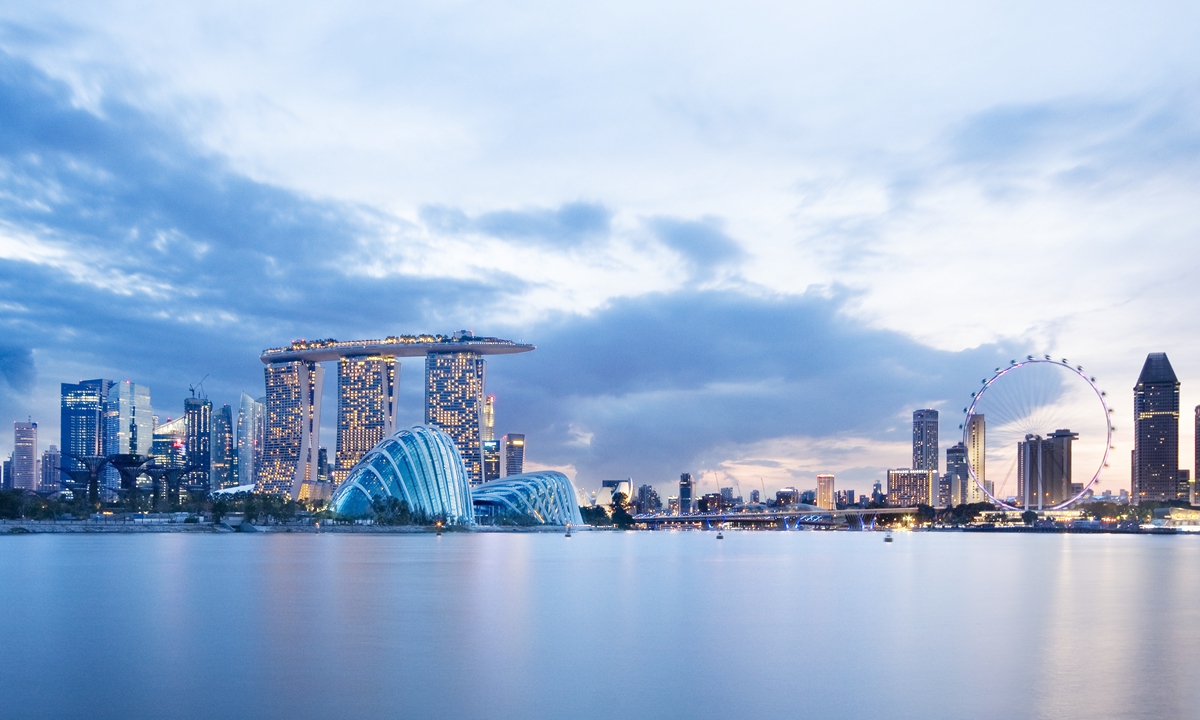
For many years, Singapore has been a favored destination for tourists and a highly sought-after place for education and employment. But when we talk about Singapore, what exactly do we mean? Is it the cityscape dominated by the Merlion and Marina Bay Sands? Is it a global standard for effective governance and economic success? Or is it a nation with a Chinese majority that is nonetheless founded on the principles of multiracial, multireligious, and multicultural nation-building?
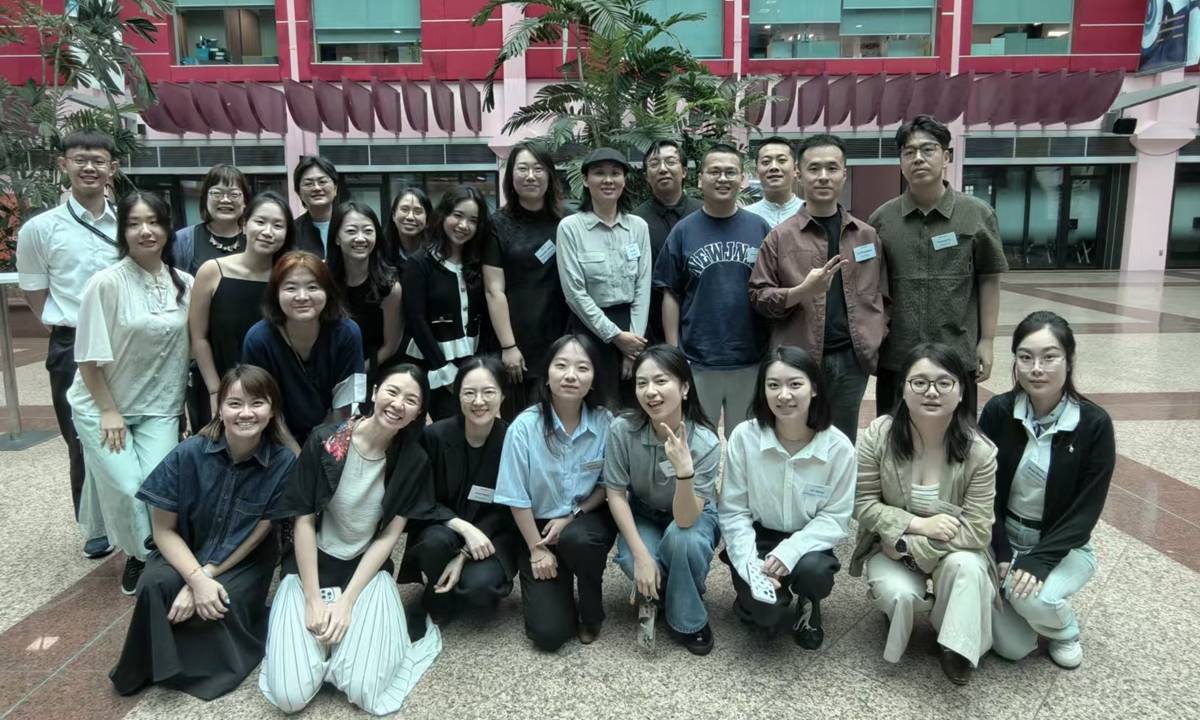
In late May, as part of a media delegation from China invited by Singapore's Ministry of Digital Development and Information (MDDI), I had the opportunity to explore the country in depth. Following a narrative journey through the past, the present, and the future, I discovered a Singapore far more complex than its well-known global image suggests.
The birth of a nation: A deliberate choice
To truly understand Singapore, one must first understand its origins. For a long time, the prevailing story portrayed Singapore's independence on August 9, 1965 as a sudden break - Lee Kuan Yew's emotional announcement of separation from Malaysia, often seen as a forced expulsion. However, materials displayed at the National Library Board and MDDI's The Albatross File exhibition provide a more intricate picture.
The exhibition, which makes confidential documents from founding leaders like Goh Keng Swee and oral histories from Lee Kuan Yew and Kwa Geok Choo available, reveals a strategic, negotiated process behind the separation. These documents suggest that both parties - Singapore and Malaysia - increasingly recognized that given the circumstances, long-term stability was unattainable. Independence then emerged as a deliberate political choice, the result of calculated negotiations and a growing belief that a new nation based on equality beyond ethnicity was the only viable path forward.
The significance of The Albatross File lies not only in the historical details it unveils but in the shift in narrative from "forced survival" to "chosen destiny." The exhibition itself is equally revealing. Historical documents, immersive installations, AI-enabled experiences, and digital interfaces allow visitors not just to observe history, but to question and participate in its interpretation.
Leaving the exhibition, I gained more than just a deeper understanding of Singapore's founding; I became aware of how Singapore actively constructs its own historical narrative. In this young nation, history is about both the past and the shaping of future generations' understanding of what "Singapore" means.
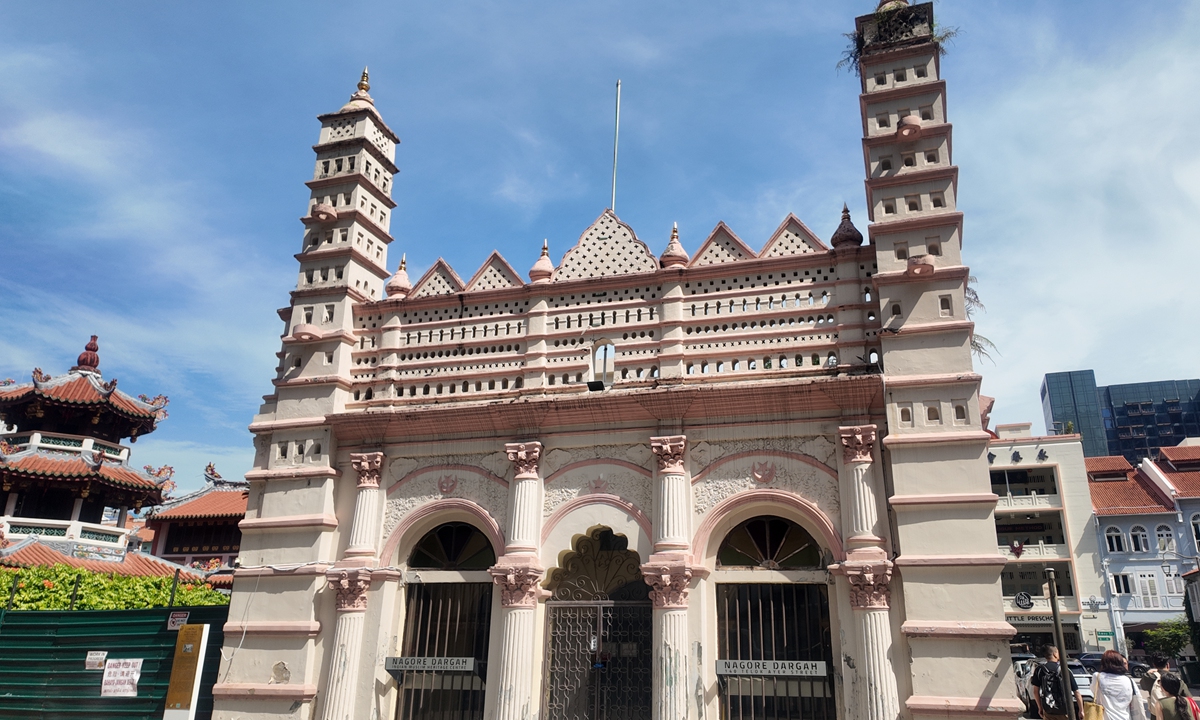
While the archive tells the story of Singapore's birth, the city itself shows how a society of diverse ethnicities, languages, religions, and immigrant backgrounds has been transformed into a shared national identity.
Walking through Telok Ayer, Little India, and Kampong Glam, one experiences the reality of a society molded by Chinese, Malay, Indian, and global migrant communities. Temples, mosques, and churches stand close to each other. Thian Hock Keng, Al-Abrar Mosque, Nagore Dargah, and Christian churches coexist as part of a long-standing arrangement of pluralism.
This is not passive coexistence but a carefully cultivated social order shaped by decades of governance and policy design.
In 1991, Singapore's Parliament issued the Shared Values White Paper, outlining five core principles: Nation before community and society above self; Family as the basic unit of society; Regard and community support for the individual; Consensus instead of contention; Racial and religious harmony. In a young nation without a single dominant ethnicity, religion, or shared historical tradition, this value system serves as an ideological anchor that transcends differences.
At the Harmony in Diversity Gallery, key concepts like "mutual respect," "mutual understanding," and "finding common ground" are consistently highlighted. From "Many Faiths, One People" to "We, the Citizens of Singapore," the narrative repeatedly circles back to a central idea: Differences may persist, but a shared community must be maintained.
This idea of collective identity takes on another dimension at the SingapoREN exhibition at the Singapore Chinese Cultural Centre. Rather than focusing solely on preserving Chinese cultural heritage, the exhibition follows the transformation of migrants from temporary residents to citizens - from those who once saw themselves as transient to those who now fully identify as Singaporeans. It's not just a story of cultural preservation but one of identity transformation.
Perhaps the most tangible mechanism sustaining this multicultural cohesion is Singapore's public housing system, planned and developed by the Housing & Development Board (HDB). The apartments built by HDB are home to close to 80 percent of Singapore's resident population, of whom about 90 percent own their home. To promote racial integration and harmony, HDB introduced the Ethnic Integration Policy in 1989, which sets limits on the proportion of households from each ethnic group in housing blocks and neighborhoods to ensure a balanced mix of various ethnic communities in HDB towns.
Across HDB towns, public housing projects continue to evolve in response to demographic shifts and the rising aspirations of residents.
For example, Harmony Village @ Bukit Batok is an assisted living resident community jointly developed by HDB, Singapore's Ministry of National Development and Ministry of Health to expand the continuum of public housing options for seniors. Known as community care apartments, Harmony Village @ Bukit Batok is Singapore's first public housing development that integrates senior-friendly housing with care services that can be scaled according to care needs, as well as social activities to support seniors to live independently within the community.
Meanwhile, Punggol Point Cove is a public housing project situated along the shoreline of Singapore's north-eastern coastline. This waterfront development features wave-like architecture inspired by its location and the town of Punggol's heritage as a fishing village. Residents enjoy panoramic sea views and easy access to Punggol Promenade. It is also located near the Punggol Digital District, Singapore's first smart business district, where residents can benefit from job opportunities and new amenities near their home. Hawker centers further embody multiculturalism in everyday life. Dietary restrictions shaped by religion are managed through regulated food environments, allowing people of different ethnicities and income levels to share the same dining spaces. Whether it's Hainanese chicken rice, Indian roti prata, Malay nasi lemak, or Teochew fish ball noodles, cultural diversity is transformed from an abstract concept into daily practice.
Through shared space, shared consumption, and shared routines, Singaporeans, despite their varied ancestries, languages, and beliefs, become woven into a single social fabric. It is within this daily negotiation of differences that a true sense of national community emerges.
The future is already here: from planning to execution
At Gardens by the Bay, many visitors see a picturesque landmark. For Singapore, however, it is a model for future urbanism. Built on reclaimed land, the Gardens showcase how ecological design and engineering innovation can create a functioning ecosystem within an urban environment to support diverse flora and fauna. It reflects a belief that even within environmental constraints, human design can create new ecological possibilities.
If Gardens by the Bay represents the future of human-nature relationships, the Punggol Digital District embodies Singapore's vision for the future economy and society. As the country's first integrated smart district, it brings together industries of cybersecurity, artificial intelligence, and robotics within a unified urban space. The Singapore Institute of Technology is directly embedded within the district, ensuring that research outcomes translate into real-world urban solutions rather than remaining confined to academic publication.
The district's Open Digital Platform (ODP) aggregates data from more than 20,000 sensors in the district and connects various systems in real time, enabling deep integration among data systems, algorithms, and physical urban space.
This forward-thinking approach extends to national digital governance. In 2026, Singapore set out 10 refreshed priorities for the next round of AI development, including boosting AI transformation across strategic sectors, and nurturing 100,000 AI bilingual talents with domain expertise and AI capabilities who can apply AI meaningfully in their domains.
At the same time, the country actively tackles emerging risks such as deepfakes and cyberbullying, through a mix of legislation, platform accountability, digital literacy education, and community coordination.
From the existential survival concerns of its early years of independence to contemporary challenges like AI disruption and climate change, Singapore consistently demonstrates a strong focus on the future. It anticipates risks early, designs policies preemptively, and seeks solutions before crises fully emerge.
Looking back on this journey, the question I began with now has a different answer.
Singapore is more than an economic success story or a model of efficient governance. It is a nation born of political choice, held together by institutions that cultivate inclusion across diversity, and sustained by a continual capacity to adapt and reinvent itself.
Perhaps this is what we mean when we talk about Singapore.
The author is a PhD candidate in International Communication, and research fellow at the Academy of International and Regional Communication Studies, Communication University of China
。
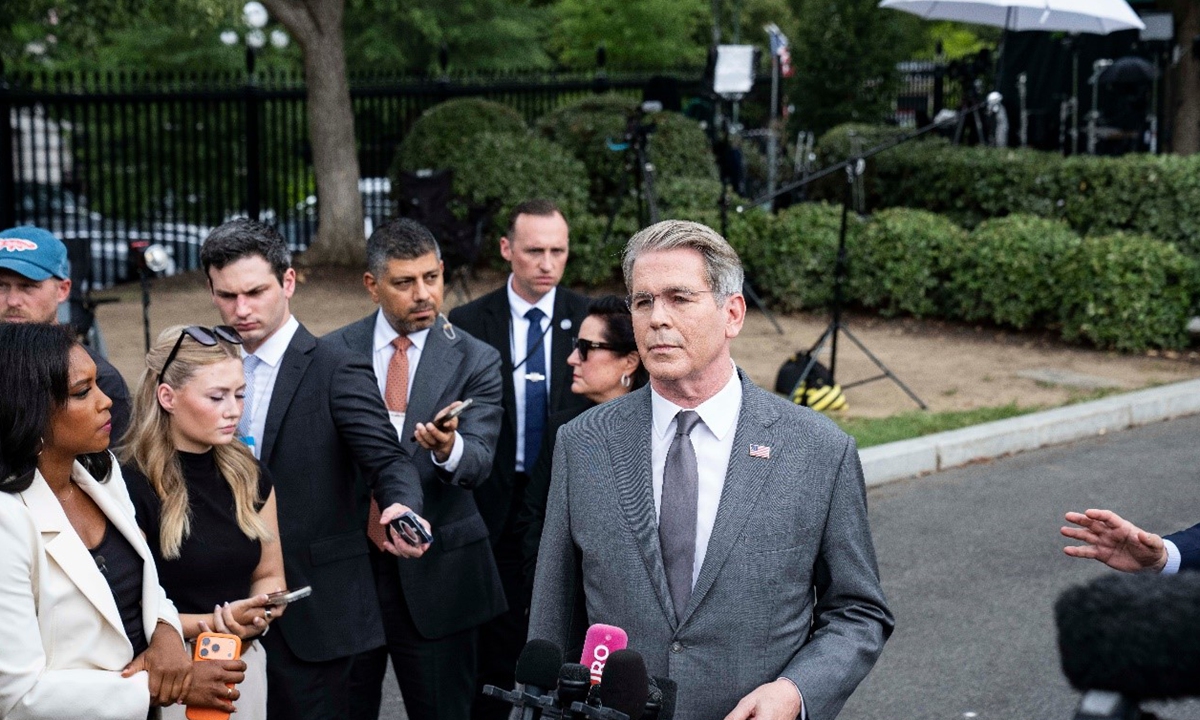
US Treasury Secretary Scott Bessent's latest remarks that Washington will impose "the toughest sanctions in history" on Iran while urging China to cooperate reflect an attempt to shift responsibility for the prolonged Iran war and the failure of US pressure tactics. By trying to drag China into the discussion, Washington is essentially resorting to the ploy of "making others take medicine for one's own illness." This amounts to the US' making excuses for its own erroneous policy toward Iran, said Chinese experts.
China opposes illicit unilateral sanctions that lack basis in international law and UN Security Council mandate, Lin Jian, spokesperson of the Chinese Foreign Ministry said on Friday in response to Bessent's remarks, calling on parties to act responsibly and stick to the political and diplomatic approach.
"We have the blockade (on Iran), and we are going to have the toughest sanctions in history," Bessent told CNBC. Bessent said he would hold a press conference on Monday to discuss details, according to a Reuters report.
When asked if the US could target China for doing business with Iran, Bessent said many conversations were best to have in private. "We are confident that everyone wants the Strait (of Hormuz) reopened, and for energy prices to come back down," he said, per Reuters.
Bessent's comments on Thursday followed US President Donald Trump's threat a day earlier of "Economic Warfare" and warning of economic consequences against any country that provided "any type of lifeline to Iran," according to Reuters.
The US appears to have reached an impasse with Iran, caught in a dilemma in which it can neither secure a military victory, reach a political settlement, nor easily disengage. Against this backdrop, Washington is seeking to intensify economic pressure on Tehran to force concessions, while also directing pressure toward China. At its core, this approach amounts to waging an economic cold war against Iran in an attempt to compel Tehran to alter its existing policies, Sun Degang, director of the Center for Middle Eastern Studies at Fudan University, told the Global Times on Friday.
Amid declining domestic support for the US' current policy on Iran, Bessent sought to shift blame onto others, a clear case of buck-passing. By blaming normal trade between Iran and countries such as China and Russia for the prolonged Iran crisis and the failure of Washington's pressure campaign on Iran, the US is "asking others to take medicine for its own illness." The root cause lies in Washington's own confrontational policy toward Iran, said the expert.
At a press conference of the Chinese Foreign Ministry on Thursday, a Bloomberg reporter asked: "US President Donald Trump has announced plans to inflict what he calls an 'economic D-Day' on Iran, including threats against Iran's trading partners. Given that China buys a large amount of Iranian oil, does the Foreign Ministry have any comment on this approach of economic warfare that Trump is threatening and how it might affect China?"
Spokesperson Lin said that sanctions and pressure tactics are not the solution. China calls on all parties to act responsibly and remain committed to a political and diplomatic approach.
Iranian Foreign Minister Abbas Araghchi described the US move as a "diversion from America's own crisis: unprecedented debt & surging interest costs." "Doubling down on failed policies will only bring further defeat - and enmity of Iranians. US economic terrorism threatens global economy and sovereignty worldwide," Araghchi wrote on X on Thursday morning.
The US has sanctioned Iran for decades without achieving its desired results. During the maximum economic pressure campaign launched in 2018, Iran suffered a severe economic downturn, yet Washington failed to force Tehran into major concessions. A new round of tougher sanctions could further strain Iran's economy and disrupt trade with regional partners, but is unlikely to trigger an immediate collapse, Tian Wenlin, a professor at the Renmin University of China's School of International Studies, told the Global Times.
Washington also appears to be taking a dual-track approach toward China: seeking to use China's economic leverage over Tehran while threatening Chinese companies that continue normal trade with Iran, said the expert.
Washington's shift from military options to economic pressure may signal limited de-escalation, but the broader US-Iran rivalry could settle into a prolonged, low-intensity standoff. Persistent tensions around the Strait of Hormuz would keep global energy markets under pressure, fueling inflation and weighing on global growth, said the expert.
Oil prices rose to more than a three-week high on Thursday following those US threats of financial penalties aimed at forcing an end to a nearly six-month-old war that has stranded millions of barrels of Middle Eastern oil, according to a Reuters report on Friday.
。
Current article:http://www.zhouangnaoguangsundianzhenmou.cfd/0yro/20260826/8607441.html
Published on:14:40:15


1
湖媒曝库明加交易进展:非常有信心下周前完成2
刘传志再次谈到5G投票事件:联想绝对没有背叛。3
14 Years of The Dirty Picture: What Makes The Vidya Balan Starrer Special Even Today4
Highest-altitude Yellow River hydropower station sets record5
台风“白海豚”在浙江台州玉环沿海登陆6
Apple AirPower无线充电器出现在iPhone XS的智能电池盒页面上。7
震撼!杭州150米彩虹喷泉来了 每天两场:16:30、19:308
Pics: Jr NTR Celebrates Wife Lakshmi Pranathi’s Birthday9
一个降低价格的好方法:索尼保持了微单次发货总量和数量的双冠。10
All Investments Are Fully Cleared: The Raja Saab Producer11
三星开始在印度和韩国推出安卓派测试版Note8。12
Samantha Ruth Prabhu and Raj Nidimoru to Bankroll Films, Together13
济南新学期周历来了!秋季开学时间为9月1日,2027年寒假、暑假时间公布14
拆开陌生快件,三天被骗45万 里面的刮奖卡可能是电诈团伙的引流陷阱15
沙特记者:C罗对短暂转会利雅得新月并参加世俱杯很感兴趣
- 随机推荐
1
美记:亚历山大造犯规能力 让雷霆跻身顶级劲旅2
媒体人:CBA官方强调注册国内球员不得私自参与其他商业赛事3
Will Smith and Jada Pinkett Smith have been separated since 2016, she says4
Retired Chinese cultural planner produces global acclaimed documentaries on Chinese railroad workers in U.S. using AI5
Kartik Aaryan’s Tu Meri Main Tera Main Tera Tu Meri Opens at Rs 8.46 Crore on Day 16
马宁回家乡阜新参加公益活动,勉励学子:热爱足球 享受快乐7
佳能确认8K EOS R全帧无反射相机将很快启动。8
U16国少逐梦德甲第二季圆满收官,两名小将参加狼堡U17训练9
Cambodia links KHQR with WeChat Pay for Chinese travelers10
全省诵读比赛决赛在榕收官11
Blenders Pride Fashion Tour Speeds Into Jaipur With High-Octane Glamour12
台风“白海豚”来势汹汹 苗族姑娘在安置点做苗绣13
四川电信邀请大众高清电话14
快船得到比尔斯特鲁斯更愿放走马瑟林 四队有意15
今天的头条新闻、震颤和其他骚乱,腾讯棕榈联盟的社交河湖再次掀起高潮。