
一虎一席谈
上海市新增1款已完成备案的生成式人工智能服务_我的网站

A | 获悉,据网信上海消息,截至8月24日,上海市新增1款已完成备案的生成式人工智能服务,累计已完成188款生成式人工智能服务备案。
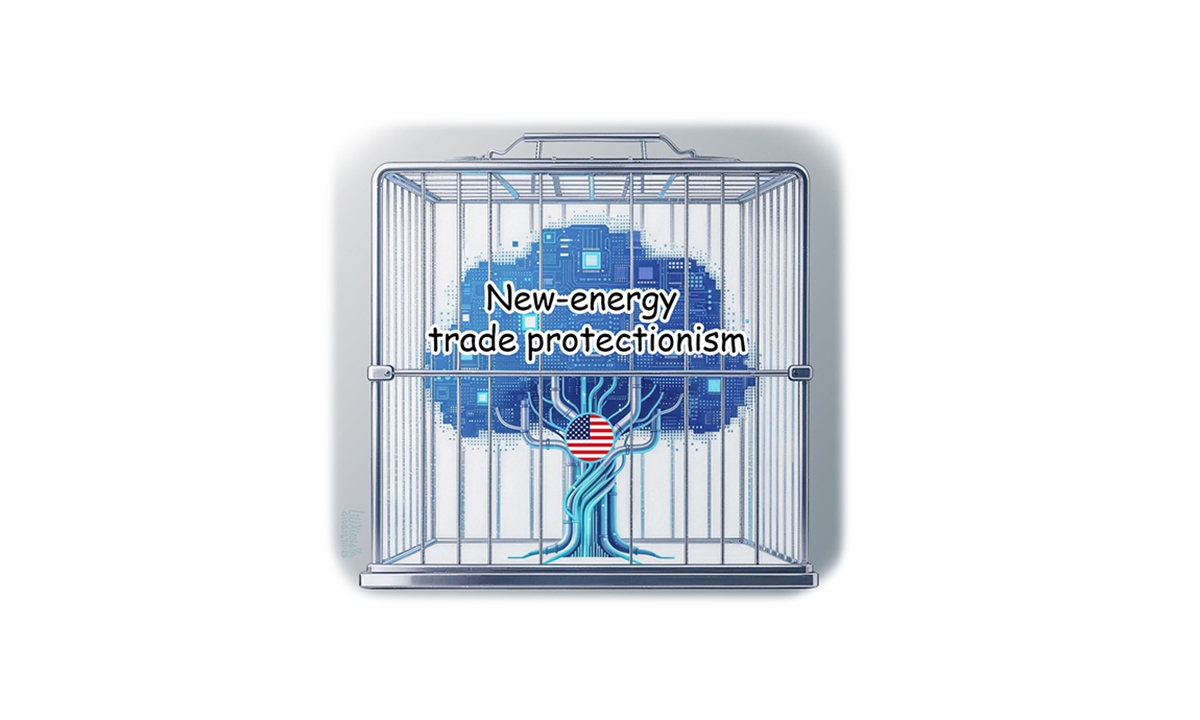
Recent media reports have questioned whether a natural gas plant built to power an Amazon data center project in Texas could become the largest climate polluter in the US. The controversy, whatever the eventual outcome, offers a reality check for America's artificial intelligence (AI) drive.
It exposes a growing contradiction: The US is racing to expand its AI capabilities, yet its protectionist trade policies are making it harder and more costly to access some of the clean-energy technologies needed to sustain that expansion. This raises a broader question: Can an energy-intensive AI race afford the costs of renewable energy protectionism?
The US is entering a new era of rising electricity demand. Data centers, the backbone of the AI economy, are emerging as one of the fastest-growing sources of power consumption. Much of that demand is still being met by fossil fuels: The International Energy Agency reports that natural gas supplies more than 40 percent of the electricity used by data centers in the US, making it their largest source of power.
So, it's not surprising that the expansion of data centers has raised concerns over their environmental impact and the pressure they could place on local power systems and electricity bills. A Gallup survey conducted in March found that seven in 10 Americans opposed the construction of AI data centers in their local area, including 48 percent who strongly opposed such projects.
The findings point to a broader challenge for the US: The race to develop AI is increasingly becoming a race to meet growing energy needs. Addressing this challenge will require more than advances in computing technology; it will also depend on an energy system capable of delivering large amounts of reliable, affordable and cleaner power. That, in turn, will require faster development and broader deployment of clean-energy technologies, from solar power to energy storage.
Yet in the clean-energy sector, the US has increasingly relied on protectionist trade measures that limit access to cost-competitive products from global markets. The country has placed greater emphasis on expanding domestic manufacturing capacity, but rebuilding entire clean-energy supply chains at home is a costly and time-consuming process. Even if expanded domestic production is achieved, it is likely to come at a higher cost, making the deployment of renewable technologies more expensive and potentially slower.
The solar industry offers a clear illustration of this policy direction. The US has continued to expand trade barriers in the sector. Reuters reported that the US government announced on Thursday a series of price floors and a 15 percent tariff on products made from polysilicon, a raw material used in solar panels.
The challenge lies in the limited scale of the US polysilicon industry. Reuters reported that the country has two polysilicon factories. Against this backdrop, relying on domestic polysilicon production while restricting access to imports runs counter to the goal of expanding solar power in the US. The country risks creating barriers that ultimately constrain its own access to the global supply chains needed for growth.
The pressing issue for the US is the speed at which new power demand is emerging. The expansion of data centers is creating electricity needs that cannot wait for domestic clean-energy capacity to develop gradually. Global supply chains can provide the scale and speed required in the near term. By narrowing access to these sources, the US risks turning clean-energy policy into a drag on the infrastructure needed for its AI race.
The US has placed AI high on its economic and technological agenda. The outcome of this race will matter greatly, as financial markets are also watching whether America can turn its AI efforts into commercial success.
This leaves the US with a difficult choice: Can it afford the cost of clean-energy protectionism while racing to build AI infrastructure? The answer may be no. Trade barriers that limit access to competitive renewable technologies could ultimately become a constraint on the AI expansion that Washington is seeking to accelerate.
The author is a reporter with the Global Times. [email protected]
。

B | 原文链接。

C |
Current article:http://www.zhouangnaoguangsundianzhenmou.cfd/3bloh/m77c.html
Published on:11:39:09
相关新闻
最后更新
- 上蹿下跳,行情的主线是什么?
- Arijit Singh Brings Heart and Harmony to His New Romantic Single Fitratein
- 重资产的轻包装:新加坡国资诉蔚来背后的矛盾螺旋
- 上半年中国国内手机出货量超98%支持北斗定位
- 한·베트남, 핵심광물·석유비축 협력…2030년 교역 1천500억불
- 利好来了!上海印发重要规划
- 数百海外“弃儿”致函尹锡悦:要求调查当年收养程序是否违规作假
- 特朗普称考虑将安大略湖更名为“美国湖”
- 戴尔G7光碟追逐笔记本京东订房:第8代i7 RTX 20614999元
- Shams:克莱表示想去争冠球队 将赴热火辅佐字母
热门新闻
- 中阿启动干旱、荒漠化和土地退化防治五年行动计划
- 加息大变数!美联储重磅表态临近!“AI总龙头”财报要来了
- 大丑闻曝光!韩国足协性贿赂20名外籍裁判,涉及中国队比赛
- 大乐透第26091期开3注一等奖
- 上港能源、达飞集团、上海电气携手刷新单次生物质甲醇加注量世界纪录
- 刷新出行体验!高速驿站开启文旅新玩法
- PM Narendra Modi Tears Into British Education System, Claims Was ‘Never Part of Indian Ethos’
- 泰州市原安全生产监督管理局副调研员赵建忠接受纪律审查和监察调查
- 【阳光•活动】小年至,年味浓——沈北新区第三幼儿园
- 【现货】8月26日各地区现货铝价格汇总