


生死狙击
3 dead after partial residential building collapse in north China’s Shijiazhuang_我的网站

A |
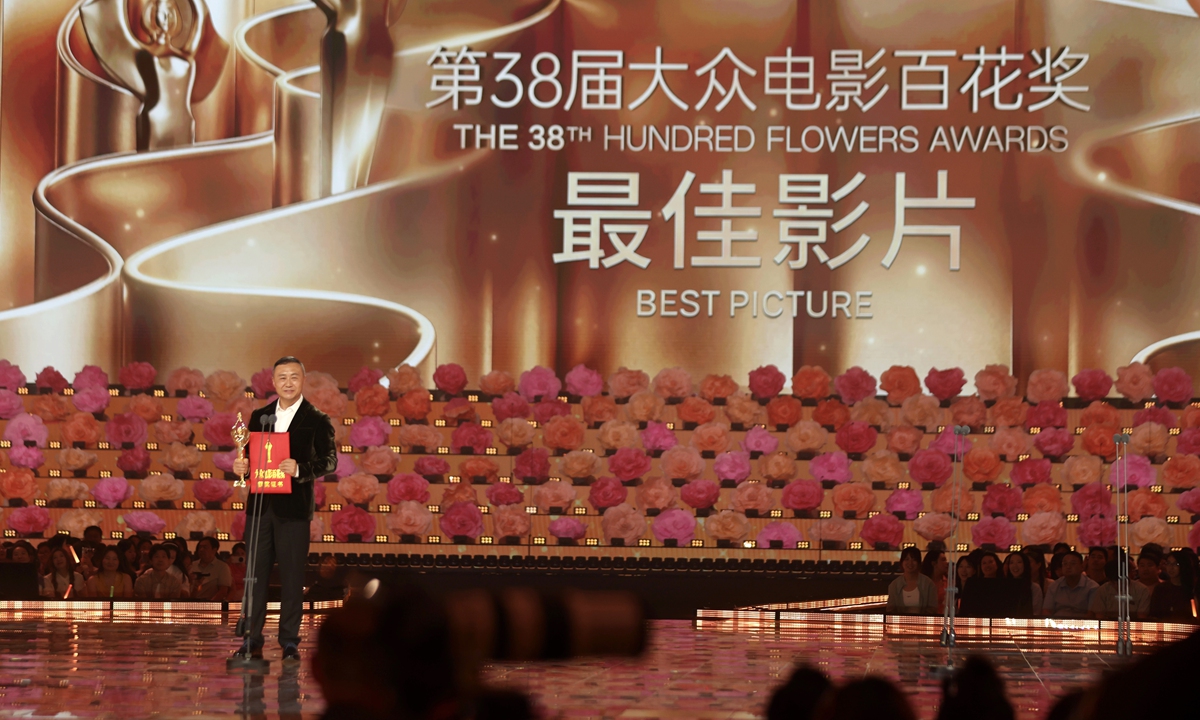
For the first time in the 64-year history of the awards, this year's edition introduced an AI-generated content (AIGC) recommendation unit, giving AI-generated films a new pathway into a major film award platform.
The move reflects a broader shift in the relationship between technology and cinema.
Rather than replacing filmmakers, AI is increasingly seen as a creative tool that lowers production barriers, expands visual possibilities and allows more people to turn ideas into films, Zhang Peng, an associate professor at Nanjing Normal University, told the Global Times.
The AIGC recommendation unit, launched on June 30, attracted 2,038 entries from around the world in just over a month. After evaluation, six productions received the "Hundred Flowers AIGC Recommendation Honor," covering categories including animation, visual effects, technology, creativity, directing and short films.
For many young filmmakers, AI has opened a new path into the industry. Multiple award-winning creators said at a seminar on the sidelines of the Hundred Flowers Awards that AI tools such as Jimeng and the Seedance model helped them with visual development, shot design, dubbing and maintaining emotional continuity.
Zhang Bohang, a representative of the team behind Yi Meng (A Dream), which won the award for Best Animated Work, said at the seminar that animation had long been a dream for the team, but high production costs had previously made it difficult to bring that dream to life. "The emergence of AI has given us a way to make our dreams come true," he said.
Lu Qiwei, a representative of the creative team behind Yecha Crossing the River, which won the Best Creative Work award, said at the seminar that Seedance allows creators to input characters, scenes, visual styles and directorial ideas, then select and organize the generated material themselves.
However, filmmakers at the event also emphasized that AI does not replace human creativity. Director Liu Shuheng, whose work Out of Control received recognition, said AI had lowered the threshold for creating visual images while raising the expectations for creators' decisions.
"AI makes it easier to create a picture, but it also makes people think more about why they choose to shoot it this way," Liu said at the seminar.
The shift is not limited to AI-powered filmmaking. The awards are also expanding recognition for emerging forms of storytelling.
The 38th Hundred Flowers Awards also introduced a new short-drama recognition section, marking the first time the awards had recognized short dramas. It marked the first time the awards had included short dramas in their recognition system, organizers said.
AI also featured prominently in the event's audience experience. Global Times reporters observed interactive installations that allowed audiences and celebrities to generate personalized digital keepsake photos, while AI was also used during the red-carpet livestream to provide real-time commentary, answer viewer questions and enhance visual backgrounds.
The Hundred Flowers Awards' embrace of AIGC comes as major Chinese film festivals increasingly explore AI's role in cinema.
Since its launch in 2024, the Beijing International Film Festival's AIGC Film Section has been the first dedicated section at a major film festival worldwide to focus on AI-powered image-making. Meanwhile, the Shanghai International Film Festival this year has launched a new "AI Studio" section, aiming to create the first experimental platform dedicated to exploring AI-assisted collaboration in film production.
From competition entries to audience experiences, these developments suggest that AI is no longer just a behind-the-scenes production tool, said Zhang.
"AI is gradually moving beyond being a filmmaking tool and becoming part of the broader film festival ecosystem," Zhang noted.
"From AI-generated films to short dramas, the move also shows how China's mainstream film platforms are embracing emerging formats and recognizing new forms of storytelling."
。

B | (ECNS) -- Three people died after part of a four-story residential building collapsed in Shijiazhuang, north China’s Hebei Province, at 5:42 a.m. Wednesday, according to the city’s Xinhua District Emergency Management Bureau. A total of four people were trapped in two households, of whom three died in hospital despite emergency treatment, while the other is receiving medical attention and is in stable condition, according to the city's emergency management bureau. Five nearby residents who sought medical attention were examined at a hospital and later discharged. Search and rescue operations have ended. Preliminary checks suggest a gas leak may have triggered a blast that caused the partial collapse. Residents of the building and nearby homes have been relocated, while the cause of the accident remains under investigation. (By Intern Yang Hongran, Zhang Dongfang) 
 。
。
Current article:http://www.zhouangnaoguangsundianzhenmou.cfd/7hk/liq3.html
Published on:00:35:38
 亚洲杯中国男排轻取巴基斯坦男排
 新疆和田地区皮山县发生3.0级地震,震源深度18公里
 花茶价格上涨30%,济南商户:“每个档次,都同步涨价”
 MINIMAX:上半年收入同比增长283.1%至1.17亿美元
 美国14岁少年挑战全球最辣玉米片被辣死
 三类城市作业车辆同步迭代 新能源渣土车保有量占全省六成多 杭州已构建渣土、环卫、清运完整低碳体系
 伊朗总统莱希:曾掀反腐风暴,对美态度强硬
 午餐选择背后的经济学
 哪些山区景区危岩拦截被动防护网服务商适配项目需求
 Meta和英伟达联手押注AI材料 发力半导体下一代制造材料
 安伯尼克 Anbernic RG 55G1 安卓掌机规格曝光:外形酷似任天堂 Switch Lite、搭骁龙 G1 Gen 2 处理器
 小米推出“米家智能燃气热水器 Pro 双循环 1 级能效 16L”,3499 元