
银魂
Chinese scientists develop ‘brain-reading’ AI model to help predict depression risk, may inspire future emotional-perception humanoids_我的网站

A | 두산에너빌, 비상대책본부 구성…남동발전 “매뉴얼 따라 조치” 26일 네팔 누와코트(Nuwakot) 지구 트리슐리 바자르(Trishuli Bazar)에서 갑작스러운 홍수가 발생한 후, 강변을 따라 주택들이 진흙탕 물에 일부 잠겨 있다. 같은 날 네팔 북부 라수와(Rasuwa) 지구를 휩쓴 대규모 홍수로 도로와 전력 시설이 파손되었으며, 당국은 피해 규모 파악에 나섰다. AFP 연합뉴스네팔 홍수로 현지에서 수력발전소를 건설하던 한국인 근로자들이 연락이 두절되거나 고립되면서 해당 기업들도 대책 마련에 분주하다. 두산에너빌리티는 26일 오후 비상대책본부를 구성해 신속한 상황 파악과 사고 수습에 나섰다. 정연인 대표이사를 포함한 현장대응팀도 27일 현지에 급파할 예정이다. 두산에너빌리티가 공사 중인 네팔 어퍼트리슐리-1 수력발전소 건설 현장의 한국인 직원은 총 20명으로 이중 재해 당시 현장에 있던 15명 중 5명이 현재 연락이 되지 않고 있다. 두산에너빌리티 측은 “사태 발생 후 연락이 두절된 직원의 가족에게도 신속히 연락해 상황을 설명했다”며 “관계 당국 및 사업 관계자들과 긴밀히 협력해 실종자 수색과 구조를 지원하는 데 최선의 노력을 기울이겠다”고 말했다. 어퍼트리슐리-1 수력발전소는 네팔 수도 카트만두에서 북쪽 70km에 위치한 트리슐리 강에 216메가와트(MW) 규모로 건설 중이다. 두산에너빌리티는 발전소 건설과 터빈, 발전기 등 주요 기자재 제작·공급을 담당하고 있다. 직원 3명과 연락이 두절된 남동발전 역시 긴급 대응에 나섰다. 남동발전에 따르면 현지 파견 직원 총 7명 중 수도 카트만두 현지 법인 인원을 제외한 현장 건설 관리 인력 3명과 연락이 닿지 않고 있다. 남동발전 측은 “해외 사업 담당 부서를 중심으로 지속적인 연락 시도와 함께 매뉴얼에 따라 필요한 조치를 취하고 있다”고 밝혔다.。

B |
Chinese scientists have developed a “brain-reading” AI model that could help predict the risk of depression among adolescents up to four years in advance by analyzing how humans respond to facial expressions, a technology expected to inspire future development of embodied intelligent humanoids capable of perceiving human emotion and thoughts through nuanced facial cues.
WHO data show that around 332 million people worldwide have depression, about one-third of whom have treatment-resistant forms of the condition. In China, an estimated 95 million people suffer from depression, National Business Daily reported, citing statistics from the China Mental Health Survey.
Using data from a population-based longitudinal adolescent cohort recruited across several European countries, the research team led by Lu Han, assistant professor at the School of Artificial Intelligence, Shenzhen University, has built an AI model that predicted which 19-year-olds were more likely to develop depression at the age of 23. The predictions were backed up by an independent clinical cohort of individuals with depression. The team’s paper was published in the journal Science Advances this month.
According to Lu, the study used brain scans taken at age 19 to predict depression-related symptoms at age 23. The study focuses on adolescence because the transition from adolescence to early adulthood is a key developmental period when depressive symptoms can increase rapidly. The earlier risks are identified, the greater the opportunity for prevention, Lu told the Global Times on Monday, adding that the findings need to be further validated in middle-aged and older adults and across different ethnic groups in future research.
In this study, the researchers analyzed data from adolescents in the IMAGEN, a population-based longitudinal cohort recruited across several European countries. At age 19, participants underwent an fMRI emotional-face task, and their emotional symptoms were assessed using standardized questionnaires. Genetic data obtained from blood samples were also analyzed, and participants were followed up at age 23. The researchers examined whether neural representations of angry faces at age 19 were associated with emotional symptoms and could predict elevated emotional symptoms four years later.
According to Lu, people without depression can more easily distinguish emotional changes based on others’ facial expressions and respond accordingly – for example, responding with friendliness to a smiling expression. But people with depression cannot do this, and are more likely to assume people are angry with them.
A brain-aligned deep-learning model developed by Lu’s team suggested that those participants whose brains were less able to distinguish between different facial emotions and tended to perceive others as angry were more likely to develop symptoms of depression and anxiety in adulthood.
The hypothesis that adolescents at risk of depression may respond differently to other people’s facial expressions than those without such risk based on the negative information processing bias long observed in depression research: people at risk of depression are more likely to notice, interpret, or remember negative social information, Lu said.
The researchers focused on angry facial expressions because they signal social threat and rejection, which are closely linked to interpersonal difficulties and negativity bias associated with depression. They hope to further understand how this bias develops within the visual system.
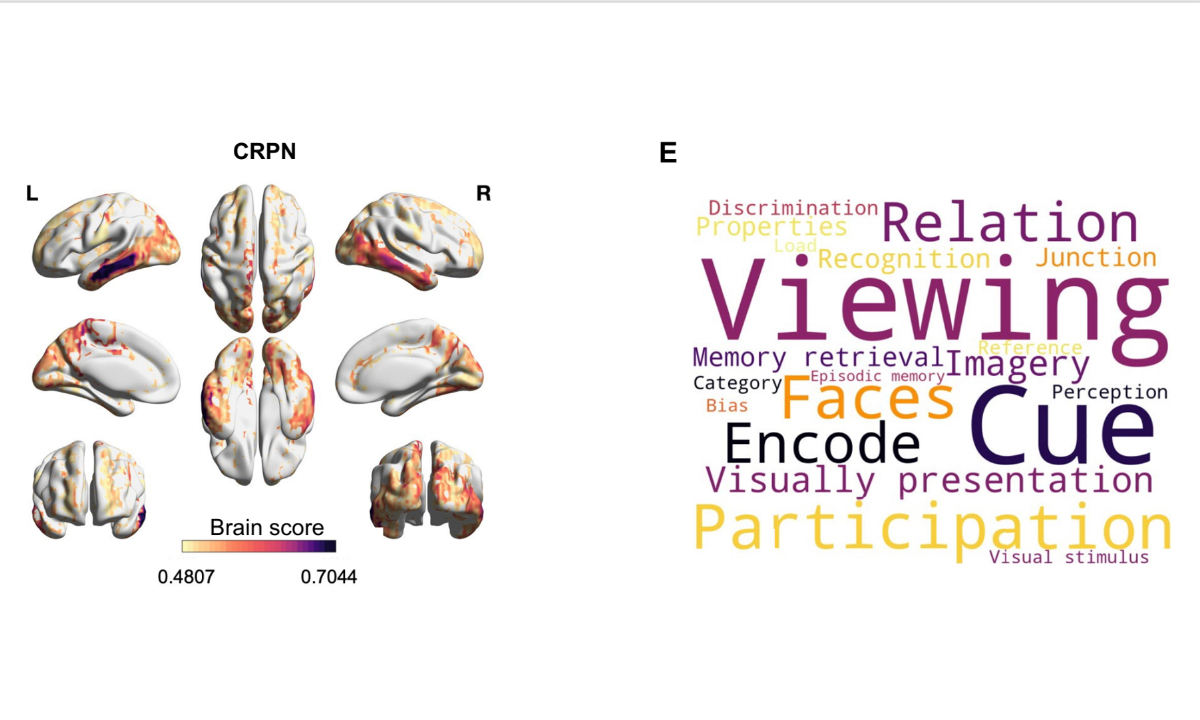
Building on this, they created a deep learning model, which mimics how the brain processes visual information, to predict how the brain encodes abstract emotional concepts such as anger.
They found that 19-year-olds whose response to facial expressions was skewed in favour of negative emotions or memories were the most likely to develop some form of depression.
Based on these findings, Lu’s team then developed a marker that can identify possible warning signs.
According to Lu, the study found that the computational biomarker was linked to the depression-related variant rs11123030 and polygenic risk for depression, suggesting that genetic susceptibility may affect emotional perception. It also provided predictive information beyond family stress and socioeconomic factors, complementing rather than replacing environmental risk factors. Therefore, depression is neither purely genetic nor purely psychological, but a complex mental disorder arising from the interplay of genetic susceptibility, brain development, emotional and cognitive processes, and life experiences.
According to Lu, the study is also expected to advance AI by aligning deep neural networks with human brain activity and using parameter perturbations to probe neural mechanisms, allowing models to both predict and explain how biases may arise.
The findings suggest that future affective computing and embodied AI should go beyond simply labeling facial expressions, incorporating visual details while preventing prior assumptions from overriding real-time sensory input, Lu said, adding that the findings could provide valuable insights for developing more interpretable robotic perception systems that more closely emulate the way humans process emotions.
。
Current article:http://www.zhouangnaoguangsundianzhenmou.cfd/aakf/difk2.doc
Published on:02:24:48
我的网站最近更新
- 小斯看好字母哥 联盟多数球员丢失强硬对抗特质
- 意法半导体“三箭齐发”扩产,折射欧盟芯片自主“大战略”
- 定位增程SUV/综合续航超1000km+!大众ID.ERA将于明年4月份量产
- 英雄联盟的新英雄解放者塞拉斯宣布,他可以复制敌人的大计。
- 景区茶农盼建农用轨道、御街原住民惧夜经济打扰……西湖“长大”了 你最关心的是什么?
- 拜登签行政命令,美国要推动生物技术进步!专家:中国CXO企业优势得天独厚_王文华_康德
- China's hydrogen production capacity tops 51 million tonnes, renewable capacity doubles
- 报告显示中国CAD市场在AI驱动下延续增长,报告显示中国CAD市场在AI驱动下延续增长
- 两部门急拨8000万元支持豫鄂皖应急抢险救灾
- Zelensky bats for more bans on Russia amid 'new terror wave'
- 阿兰·史密斯:桑切斯是切尔西争冠最大弱点,必须尽快升级门将
- 我从草原来:一台歌舞晚会里的“中华民族一家亲”
- 강원도 산업용 전기요금 8% 인하…정부·한전 지역 요금제 공개
- Sidharth Malhotra Praises Kiara Advani for Her Strength As a New Mother
- MCOCA Court frames charges in Salman Khan house firing case
- Xi stresses consolidating, expanding campaign on correct view of governance performance
- Rashmika Mandanna and Ayushmann Khurrana Starrer Thamma Releases on OTT
- 凝心聚力 加压奋进
- 沃特森加盟骑士 名记:他让骑士首发阵容得到升级
- 微视频丨石家庄五大产业,到底有多大?
- 四档宝箱免费送!《无忧》海量资源到手,养成资源不用愁!
- 回应球真牛!雷蒙攻防都有贡献 9中4&三分4中2拿到11分4前场板
- 扩大中国电信ESIM试点城市范围:增加武汉/深圳
- 河北五超·微视频|沧州队球员马越带伤重返赛场,全场高喊 "马越加油"
我的网站热门资讯
- 快船声明:没向小卡输送资金 没安排人代付报酬
- Huawei denies demanding nationwide removal of 'bamboo cicada' toy over reputation dispute
- 嫦娥四号放多少钱?大概和建造一条1公里长的地铁差不多。
- 薪资专家解析哈登续约:骑士需先清理薪资空间
- 今年上半年全国结婚登记327.5万对
- "대규모 인명 피해"… 티베트·네팔 접경지역 산사태
- China National Tourist Office in Tokyo showcases Chinese tourism at Hokkaido travel fair
- 小米玄戒 O100 原型机、AI Cube 真机首秀:自研芯片加持,内置 Xiaomi MiMo 端侧模型
- 炒货机器人火候拿捏堪比老师傅
- Rudolph Isley, founding member of The Isley Brothers, dies at 84
- 推进城市排水设施改造提升道路排涝通行能力
- 尽管 Rockstar 母公司 Take-Two 已向微软和 Discord 发出传票,GTA6 泄密者仍发布了更多实机视频
- 我市召开地矿融合发展工作会议
- 武汉发布高温黄色预警:今天白天,大部分街道(乡镇)最高气温将升至35℃以上,局地可达37℃以上
- 业界报告称中国信托行业呈加速增长态势,业界报告称中国信托行业呈加速增长态势
- Ek Deewane Ki Deewaniyat OTT Release: When & Where to Watch Harshvardhan Rane and Sonam Bajwa's Film
- As Mexico expands abortion access, activists support reproductive rights at US border
- 市场监管总局:累计实施质量攻关重点项目2060个
- 反跨境腐败法草案首次提请全国人大常委会会议审议
- 福州戍守台湾将士墓群修缮保护活化利用纪实
- 北京今天下午至傍晚前后有雷雨,本周最高气温在31℃左右_白天_刘茜贤
- 中国人民银行将开展隔夜逆回购操作
- TA:恩佐防守意识不够敏锐,与凯塞多组成双后腰时表现并不理想
- 风雪中坚守,撑起通信“保护伞