蒙面唱将猜猜猜
US Pentagon official’s Manila speech exposes alliance fragility, with Philippines likely to bear costs of provocations: Chinese expert_我的网站

一 |
直播吧4月21日讯 张继科近日更新了自己的社交媒体,他认为正手强反手弱的选手更容易登顶,而反手强正手弱的选手不容易登顶。
张继科说道:“正手强反手弱的人就是步伐好,反强正弱的人就是步伐差。
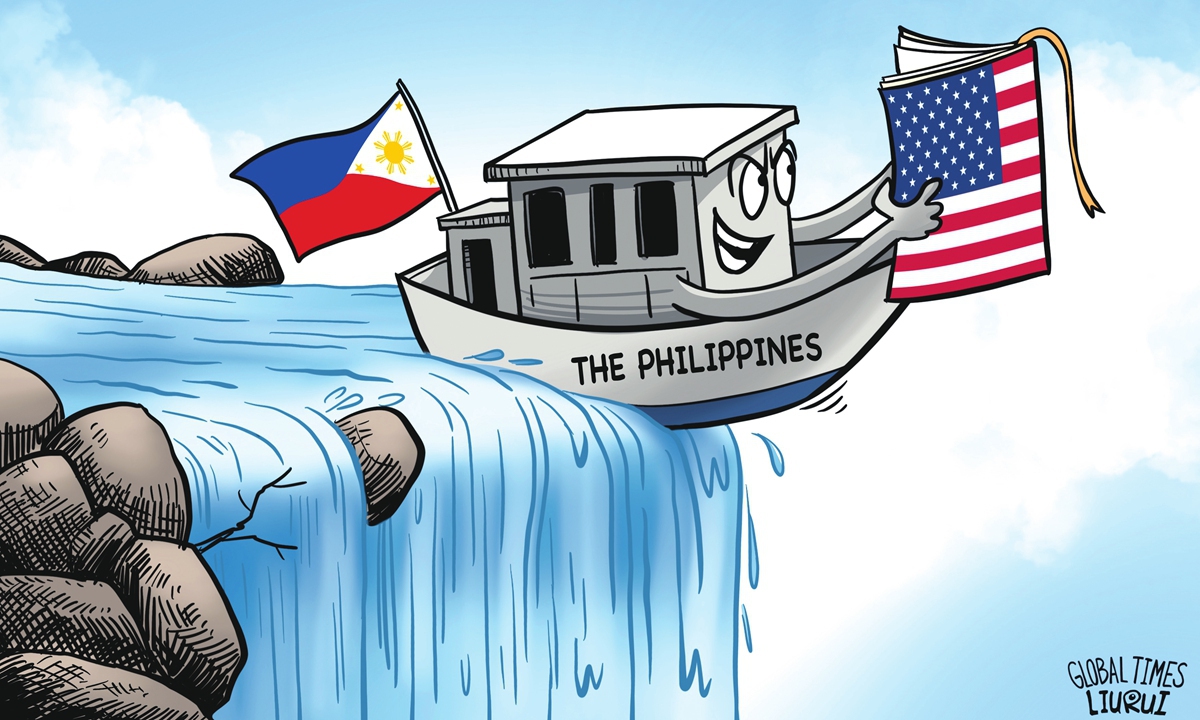
Illustration: Liu Rui/GTUS Pentagon official Elbridge Colby's latest Manila speech, in which he called on allies to "invest more" in their own defense and stressed that Washington wants "partners, not protectorates," has drawn attention from some Philippine media. Colby's claims also expose the fragility of the Manila-Washington alliance and Washington's push to enlist "Indo-Pacific" allies in serving its own strategic interests, a Chinese expert said, warning that the Philippines, by placing itself on the front line of provocations against China, risks being a geopolitical pawn left to bear the consequences on its own.
While delivering a speech at the Stratbase Institute in Manila, Philippines, on Monday, Colby, the Under Secretary of War for Policy, laid out the US' so-called "flexible realism" approach to the Indo-Pacific, stressing that the US is "definitely not disengaging from Asia" but strengthening its forward posture and seeking to build a "denial defense" along the First Island Chain, according to a transcript of the speech released on the US Department of War website.
At the same time, he called on US allies and partners to step up, invest more in their own defense, and take responsibility for their own sovereign security. "We are looking for partners, not protectorates," Colby claimed.
The claims have drawn attention from some Philippine media outlets, with some linking them to the South China Sea issue. However, the transcript of Colby's speech showed that he did not mention China, the Global Times found.
A Manila Bulletin report noted that after calling on allies to invest more in defense, Colby cited the Philippines as an example of the "kind of partner Washington wants to work with." He praised Manila for "strengthening its military and coast guard capabilities while deepening operational cooperation with the US" amid what the report described as China's "aggression" in the South China Sea.
Colby's visit to Manila marked his first official trip to Southeast Asia as an undersecretary under the Trump administration. He is scheduled to travel from Manila to Jakarta, Indonesia; Bangkok, Thailand; and Phnom Penh, Cambodia, said the report.
Meanwhile, a Manila Standard report interpreted Colby's remarks as showing that "the US is working closely with the Philippines" to strengthen Manila's military capabilities and protect its sovereign rights in the South China Sea, despite the fact that Colby did not mention China in his speech.
The US appears to be adopting a more retrenchment-style approach, shifting from leading directly to relying on regional allies to take the frontline role while providing support. This approach allows Washington to advance its interests while lowering its own costs, Song Zhongping, a Chinese military affairs expert, told the Global Times.
Song noted that Washington seeks to use repeated maritime frictions to tie down Chinese resources, which helps explain Colby's praise for Manila: the Philippines bears part of Washington's strategic burden while receiving largely rhetorical US support.
A South China Morning Post report on Tuesday noted that Colby avoided mentioning the recent disputes over Huangyan Dao, despite Washington having criticized China's establishment of a nature reserve there just two days earlier. The report described the omission as a "measured tone" ahead of a potential meeting between the Chinese and US leaders.
Washington's primary concern is its own interests. At the core of its "Indo-Pacific strategy" is strengthening its alliance network by pushing partners such as the Philippines to shoulder greater security burdens in pursuit of US strategic goals. As US-China diplomatic dynamics evolve, countries serving as Washington's geopolitical spearheads in confrontations with China risk being left behind, said some observers.
Song noted that this also reveals the fragility of the US-Philippine relationship.
The US has encouraged the Philippines to take the front line in confrontations with China while offering mostly rhetorical support. Should tensions escalate, Manila would bear much of the cost on its own, said the expert.
。

二 | 就是这么直接,我们打比赛的时候,都知道我反手好,但是我紧张的时候还是用正手,反手好的人很难登顶,正强反弱有可能登顶,反强正弱不可能登顶。正手强反手弱的人打到顶级水平,再弱反手也比一般人强,我说的是顶尖选手。我就不点名不点姓了,不论是中国队还是欧洲队,包括韩国队也是这样。
Current article:http://www.zhouangnaoguangsundianzhenmou.cfd/list_b4vtlo/6kljrjh.docx
Published on:17:28:02