帝都
机器人会“踩”缝纫机了 一台顶两三个人_我的网站

A | 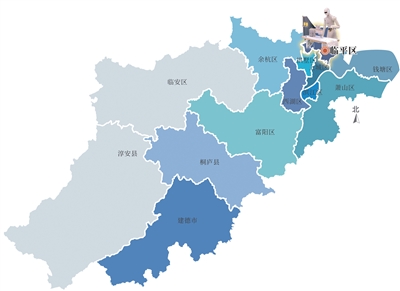 制图 高薇
制图 高薇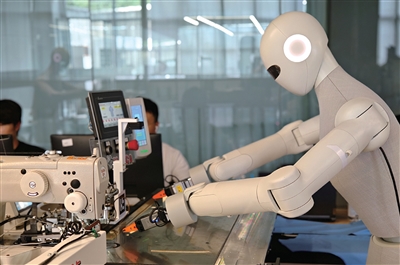 Aitu人形机器人在做衣服8月的北京,2026世界机器人大会展馆里,一个安静的展台前围满了人。

Illustration: Xia Qing/GT
A few days ago, The New York Times published a story with the headline "China's Robots Know Kung Fu and Can Scale Walls. Can They Woo Investors?" Soon after, China's capital market delivered its answer through Unitree Robotics' IPO. Investors piled in so heavily that the preliminary online subscription multiple hit an eye-watering 8,288.82 times. The strong demand can, to some extent, be seen as a vote of confidence from investors in the commercial prospects of humanoid robots. The market's verdict is clear: China's robots have received a high score.
In recent months, China's robotics sector has drawn growing international attention. Some overseas commentators have questioned whether Chinese humanoid robots are still "performative rather than functional," casting doubt on the prospect of a large-scale commercial market emerging in the near term. The IPO of Unitree Robotics, however, has provided fresh evidence in that debate. According to the company's prospectus, its revenue rose from 159 million yuan ($23.6 million) in 2023 to 1.699 billion yuan in 2025. The numbers point to the expanding commercial potential of robotics.
For those seeking to gauge the progress of China's robotics industry, Unitree Robotics' prospectus is worth a closer look. Beyond the numbers, the document offers a detailed picture of the company's products, business model and growth strategy. Given Unitree Robotics' role as one of the sector's notable players, the prospectus also provides a useful reference point for assessing the industry's current stage of development.
Over the past few years, China's technology capabilities have expanded across a range of fields, from semiconductors and artificial intelligence to humanoid robots and beyond. This progress has given rise to a group of technology companies that are now entering a more active phase of public listings. The IPO of CXMT, for instance, attracted considerable attention. More technology companies are expected to follow. The emerging wave of technology IPOs suggests that China's capital market is accelerating its role in bringing technology companies closer to investors and the broader market.
As more Chinese technology companies enter the capital market, prospectuses, financial reports and market responses are bringing more information about their profitability and strategic direction into public view. This gives global observers more data points with which to assess China's technological development. Questions such as whether humanoid robots are merely a momentary wave of attention or a business opportunity backed by market fundamentals can increasingly be answered through financial markets. In this process, China's capital market is bringing more information into view and creating a reference point grounded in market realities for technology companies, one that exists beyond external narratives and speculation surrounding China's technological rise.
In recent years, China's technological rise has generated considerable international discussion. Within that discussion, two distorted narratives have emerged. One portrays China's technological progress as a "threat" far beyond what the evidence supports, while the other seeks to downplay its advances. The coexistence of these two opposing narratives has made it harder for the outside world to develop a more rational assessment of China's technological development.
China's technological progress does not need to be exaggerated, nor does it need to be underestimated. The capital market may be building an information base rooted in business realities, allowing investors to examine, evaluate and assign value to technology companies based on their actual performance. Such a mechanism could help address some of the questions surrounding China's technological development: How far has China's semiconductor industry advanced? Can external technology restrictions deliver their intended results? What directions will shape the next stage of growth?
As this information base rooted in business realities continues to evolve, international perceptions of China's technology sector should increasingly be grounded in facts. The West's engagement with Chinese technology companies could also be guided by market principles - making judgments based on business and economic realities rather than allowing politically driven narratives to distort assessments of technological progress.
The author is a reporter with the Global Times. [email protected]。

B | 一款专为服装制造设计的“女性人形机器人”Aitu,安安静静站在缝纫机前,从堆叠的布料中精准分离出单张裁片,抓取、移动、对齐,稳稳送入模板机,一针一线缝衬衫、贴口袋。动作不算快,但很稳。“真努力,别人在秀肌肉,它在干活呢。”一位参观者话音刚落,周围人不约而同地笑了。这款机器人来自浙江艾图具身智能科技有限公司。7月31日,临平区委一届十三次全会提出,要“加力推动人工智能创新发展、赋能千行百业”,要“大力推进工业新临平建设”。艾图的这台“缝纫机器人”,正是这场变革的一个缩影。万亿级市场的痛点为什么要研发“会缝纫的机器人”?“主要是解决‘招不到人、留不住人’的真实问题。”艾图机器人副总经理娄灵通说,服装行业全球大概有1.5亿产业工人,但这都是存量,增量很少。“早上8点进、晚上10点出,做的都是同样的事情,你看我们这一代,还有我们的下一代,谁还愿意去服装厂踩缝纫机?”“有订单,缺工人,这是全球服装产业共同面临的挑战。”在他看来,衣食住行,人可以不开车,但不能不穿衣服,这是个万亿级的刚需市场。艾图人形机器人R1,就是冲着这个痛点来的。服装制造正在经历一场从自动化到智能化的升级。艾图算过一笔账:单台机器人可替代2到3名重复工位工人,投资回报周期为18到24个月。

C | “机器人不会疲劳,不会有情绪波动,也不需要缴社保、请病假。100个人会做出100件不一样的产品,但机器人能保持品质的一致性。”娄灵通说。先追求稳定,而不是快“动作有点慢啊,看着着急。

D | ”世界机器人大会展馆现场,有人轻声说。这句话,被娄灵通听进去了。“你观察得很仔细啊,我们机器人的效率确实还有提升空间。跟老师傅比,差距是存在的。”娄灵通毫不回避。

E | 老师傅的优势在于手感、经验和应变能力。面料稍有变化,马上就能调整手法,这是几十年积累出来的。但机器人优先追求的是稳定可靠,而不是快。

F | 娄灵通打了一个比方:“通用机器人处理刚体非常成熟,但处理柔性面料就如同‘用手抓豆腐’,力度大了变形,小了抓不住。

G | 丝绸又滑又软,牛仔又厚又硬,受力后的变形方式完全不同。

H | ”怎么攻克这些难题?娄灵通说:“我们的缝制垂域具身大模型,训练数据来自大量头部服装企业的真实产线,涵盖不同面料、不同工序、不同场景的操作经验。这不是实验室里训练出来的,而是在真实产线上一针一线干出来的。”在他看来,“通用机器人公司可以做出一样的硬件,甚至更好,但它们没有服装产线的真实数据,这才是艾图最核心的护城河”。进步已经在发生。

I | 娄灵通透露,去年发布Demo时效率只有18%到19%,今年如果全开,能达到35%甚至40%,一年左右的时间,已经翻倍了。目前,在单一品类、单一面料条件下,艾图机器人裁片分离成功率已达97%,缝纫合格率超过98%。
Current article:http://www.zhouangnaoguangsundianzhenmou.cfd/news/20260826_851460.xls
Published on:19:25:13