
初代吸血鬼
China rejects US-led statement on missile test notification, warns against ‘political manipulation’_我的网站

A | ANCHORAGE, Alaska -- Two deer struggling in the waters of southeast Alaska’s famed Inside Passage finally made it to land, thanks to two Alaska Wildlife Troopers who gave the deer a lift in their boat.Sgt. Mark Finses and trooper Kyle Fuege were returning from a patrol in nearby Ernest Sound to Ketchikan on Oct. 10 when they spotted the deer, agency spokesperson Justin Freeman said in an email to The Associated Press.The deer were about 4 miles (6.4 kilometers) from any island in the channel, which is favored by large cruise ships taking tourists in summer months to locations such as Ketchikan and Juneau.The deer were floating down Clarence Strait about 14 miles (22.5 kilometers) northwest of Ketchikan, but not toward any particular island, Freeman said. They were fighting the current during midtide.“Out in the middle of Clarence, they’re in rough shape, like on their last leg,” Finses said on a video he shot with his phone and that the troopers posted to social media.The troopers stopped their 33-foot (10-meter) patrol vessel about 150 yards (137 meters) from the two deer, which saw the boat and headed toward it. The troopers shut off the engines so the animals wouldn’t be spooked.When the deer reached the boat, they butted their heads against it, then swam right up the swim step, at which point the troopers helped them get the rest of the way onboard. Once in the boat, the deer shivered from their time in the cold water. The average temperature of the water in Ketchikan in October is 50.4 degrees Fahrenheit (10.2 degrees Celsius), according to the National Oceanic and Atmospheric Administration. “I’m soaked to the bone,” Finses says on the video. “I had to pick them up and bear hug them to get them off our deck and get them on the beach.”Once back on land, the deer initially had difficulty standing and walking, Freeman said. But eventually, they were able to walk around slowly before trotting off.“The deer ended up being completely OK,” he said.It’s common to see deer swimming in southeast Alaska waters, going from one island to another; what's not common is to have deer swim up to a boat and try to get on it, Freeman said.。
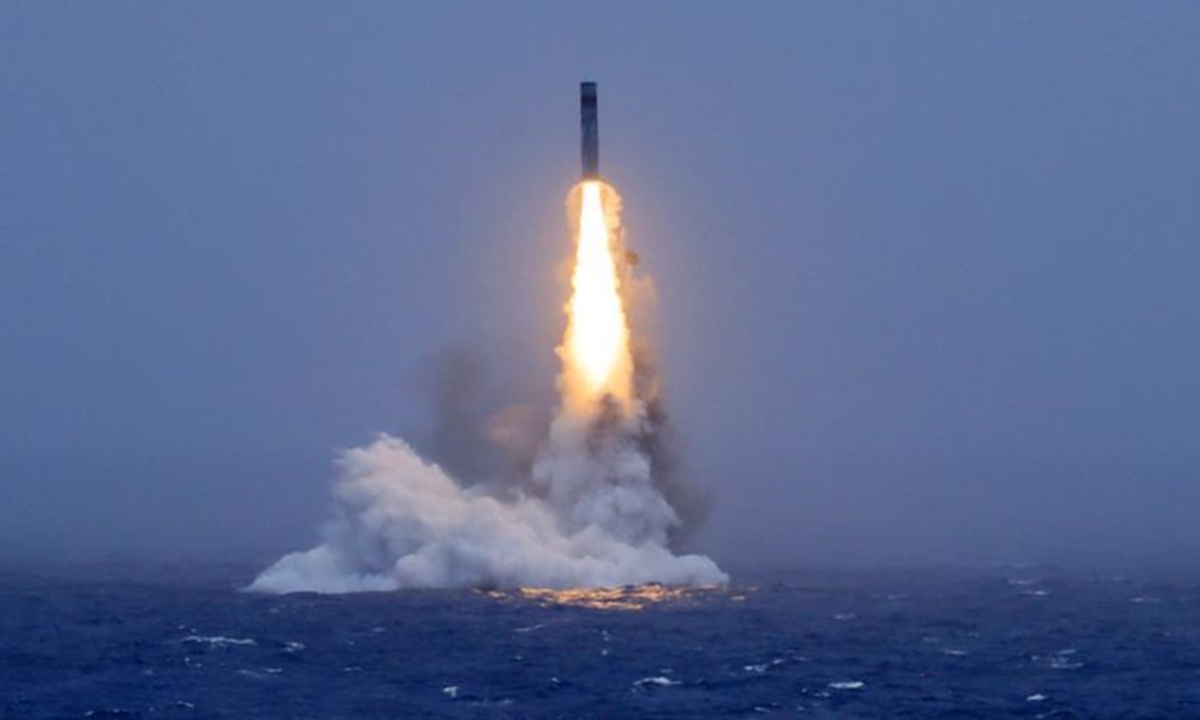
China on Wednesday slammed a US-led joint statement regarding China's notification of a ballistic missile launch, calling the move as being driven solely by political motives and exposing the hypocrisy and double standards of the US and certain countries.
"The so-called joint statement by the US and relevant countries at the Conference on Disarmament, which brandished the Hague Code of Conduct Against Ballistic Missile Proliferation and alluded to China's missile test launch, was driven solely by political motives and fully reveals their hypocrisy and double standards," Chinese Foreign Ministry Spokesperson Guo Jiakun said on Wednesday.
China urges relevant countries to stop abusing multilateral arms control mechanisms, replace irrational confrontation with sincere dialogue and create conditions necessary for enhancing dialogue and exchanges in the area of arms control, Guo said.
The comments came after China's Ambassador for Disarmament Affairs Li Chijiang firmly rejected the US-led joint statement at a UN meeting in Geneva on Tuesday local time, stressing that China's legitimate defense modernization should not be called into question, and its goodwill in providing advance notification of missile launch should not be hijacked by geopolitical calculations.
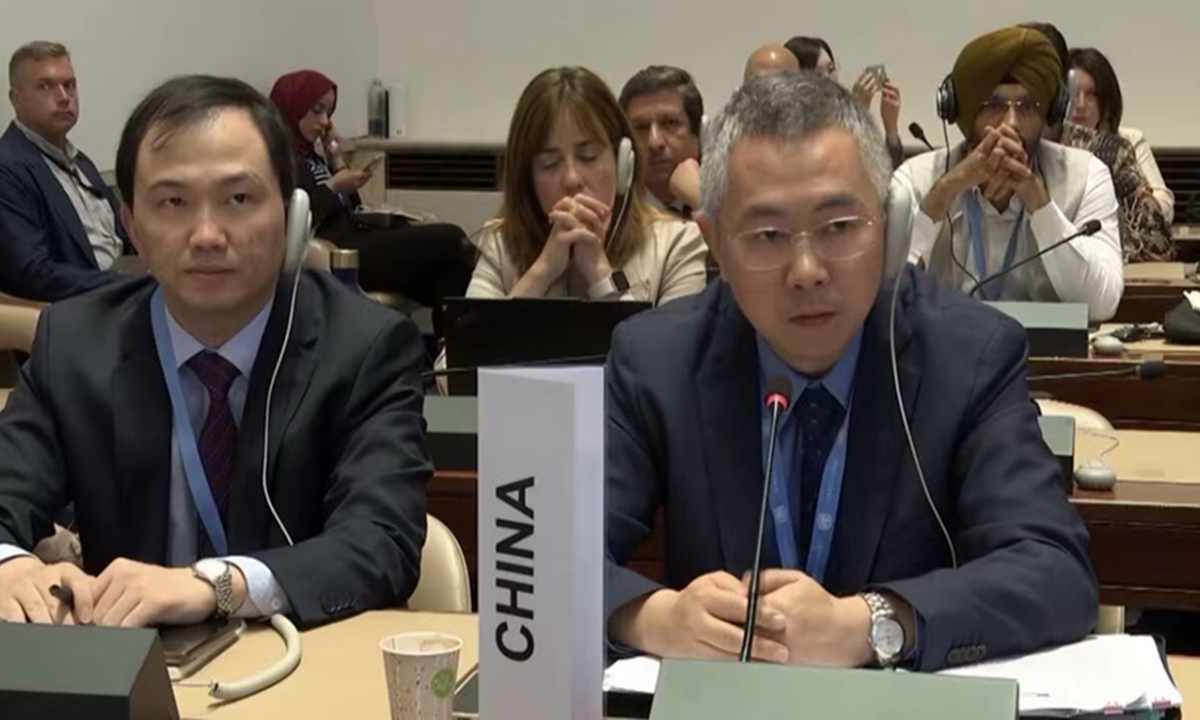
At a plenary meeting of the Conference on Disarmament in Geneva on Tuesday, the US and other 40 countries issued a joint statement on what they called "notifications of ballistic missile launches," criticizing China's submarine-launched intercontinental ballistic missile test conducted in July.
In response, Li Chijiang called the move political manipulation and blatant double standards and said China firmly opposes the abuse of the Conference on Disarmament for political maneuvering.
Driven by its own political interests, the US had rallied a number of countries, including some that are not members of the conference, to join the statement and had nitpicked and leveled baseless accusations against China's goodwill gesture of providing advance notification of the missile test, he said.
He noted that the US criticism was groundless, saying Washington had cited the voluntary political commitment of the Hague Code of Conduct Against Ballistic Missile Proliferation (HCOC) to demand that China provide advance notifications of missile launches. However, China is not a member of the HCOC and is therefore not bound by its provisions.
The Chinese People's Liberation Army Navy announced on July 6 that one strategic nuclear submarine of the navy successfully launched a strategic missile carrying a dummy warhead toward relevant high seas of the Pacific Ocean at 12:01 pm, which landed precisely within the designated waters.
China notified relevant countries in advance of the test launch of a nuclear submarine-based strategic missile, demonstrating the openness and transparency of the Chinese armed forces, said Chen Xi, a spokesperson for the Ministry of National Defense, at a press conference in July.
The US led statement at the Geneva disarmament conference seeks to inject geopolitical rivalry into a multilateral arms control platform. Rather than advancing genuine disarmament, Washington is seeking to stigmatize China as a security threat, constrain its legitimate defense related development and strategic deterrence capabilities, rally an anti China bloc and reinforce US led hegemony, Zhang Junshe, a Chinese military affairs expert, told the Global Times.
The US had repeatedly hyped China's July test launch. Previously on July 8, an official from the US Department of State criticized China's missile test launch, claiming that China notified the US too late and didn't give sufficient detail.
In response, Chinese Foreign Ministry spokesperson Mao Ning said at a press conference that China has stressed more than once that the test launch complies with international law and customary international practice and is not directed at any specific country or target. The Chinese side has released relevant information in a timely manner and notified the US and other countries beforehand.
Distracting attention
The US-led group doesn't represent the international community. Its accusations over China's missile tests lack both reason and legitimacy, reflecting prejudice, hegemonic thinking and an attempt to constrain China's development, said a Beijing-based scholar of China-US relations.
By rallying the other 40 countries to pressure China, the US has once again exposed its familiar playbook of double standards, bloc-building and confrontation. More broadly, Washington's China policy increasingly reflects strategic anxiety and a lack of confidence - not only in governance, the economy, and technology, but also in the military domain, said the expert.
According to the list of 40 other countries published by the US State Department, the signatories include US allies in Europe and Asia. The statement also called on all countries, particularly nuclear-weapon states that launch intercontinental ballistic missiles (ICBMs), submarine-launched ballistic missiles (SLBMs), and space launch vehicles (SLVs), to provide notification at least 24 hours in advance. "Such notifications should include information such as the general class of the ballistic missile or SLV, the planned launch notification window, the launch area and the intended direction of flight."
Zhang Jiadong, professor at the Center for American Studies, Fudan University, said by demanding at least 24 hours' advance notice and detailed launch information, the US wants to gain greater visibility into China's strategic nuclear capabilities by securing earlier and more specific data on missile tests.
By hyping transparency and notification requirements, Washington is seeking to pressure China into revealing more about its military capabilities, reflecting growing anxiety over China's capability, even as questions remain over Washington's own transparency regarding missile tests and nuclear deterrence, said Zhang Jiadong.
Military affairs expert Zhang Junshe also noted that the US has intensified its criticism of China to deflect attention from its own expansion of extended deterrence, nuclear-sharing arrangements and missile-defense programs. These moves heighten the risk of nuclear confrontation, while Washington appears to believe that accusing other countries of lacking transparency can help justify its own military buildup and destabilizing policies.
Moreover, the US possesses one of the world's largest nuclear arsenals and conducts frequent ICBM tests. Against that backdrop, it is absurd for Washington to criticize China, which keeps nuclear capabilities at the minimum level required for national security, said Zhang.
For example, in a single test event last year, the US Navy conducted four scheduled test launches of unarmed Trident II D5LE submarine-launched ballistic missiles from an Ohio-class ballistic missile submarine off Florida between September 17 and 21, 2025. The launches brought the Trident II D5 strategic weapon system to 197 successful flight tests, according to the US Navy.
At the UN meeting in Geneva on Tuesday, China's Ambassador for Disarmament Affairs Li Chijiang also noted that the US was in no position to criticize China over missile testing. China has conducted only three intercontinental ballistic missile tests to date, the fewest among the five nuclear-weapon states, while the US has carried out more such tests, and more frequently, than any other country, he said.
The US has itself failed to properly fulfill responsibilities regarding missile-test notifications and therefore has no grounds to criticize China's voluntary advance notification, Li added.
Li stressed that China remains committed to peaceful development and follows a self-defensive nuclear strategy. China keeps its nuclear forces at the minimum level required for national security and does not participate in any form of nuclear arms race, he said.
China's nuclear forces are an indispensable part of efforts to deter nuclear war, safeguard world peace and security, and maintain global strategic stability. "How can the US, a prolific missile tester and relentless arms expander, fault China for voluntarily giving advance notice? That is hegemonic double standards - and a blatant affront to international fairness and justice," said Zhang Junshe.
。
Current article:http://www.zhouangnaoguangsundianzhenmou.cfd/tkk/u9tk.doc
Published on:08:24:22
 India logs 1,946 new Covid cases
 Korean Dramas & Films Releasing In December: Made in Korea & More
 Larry Hogan says he has "not closed the door" to running for president under a No Labels ticket
 海外业务有何影响?医药外包板块重挫,千亿巨头跌停,多家公司回应_生物_美国
 同比增长14.1% 比亚迪5月份销售382476辆 腾势Z9推出三幅式方向盘
 全球出生率快速下滑,人口“冬天”即将到来?