
门
明米创始人雷军:明米不会挑起战争,但不怕战争_我的网站

一 | 1月10日下午,红米红米大会在即将开幕的北京小米新总部旁举行。小米集团董事长兼首席执行官雷军上台发布售价999元的红米笔记7手机。
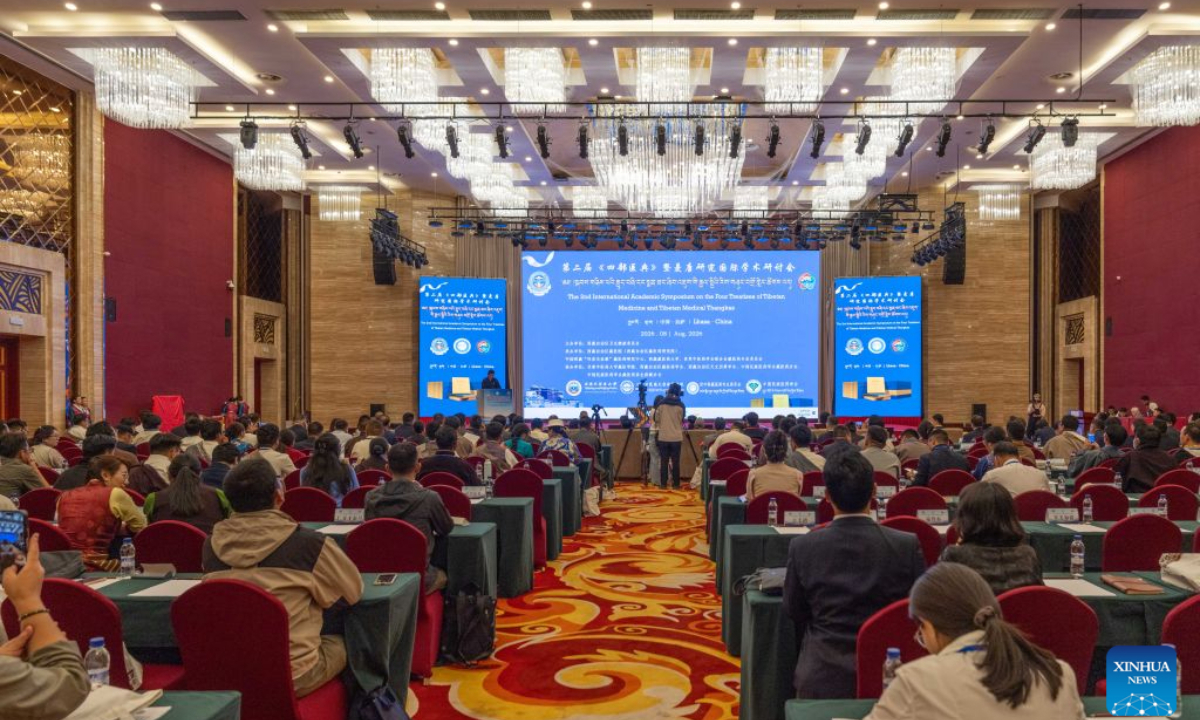
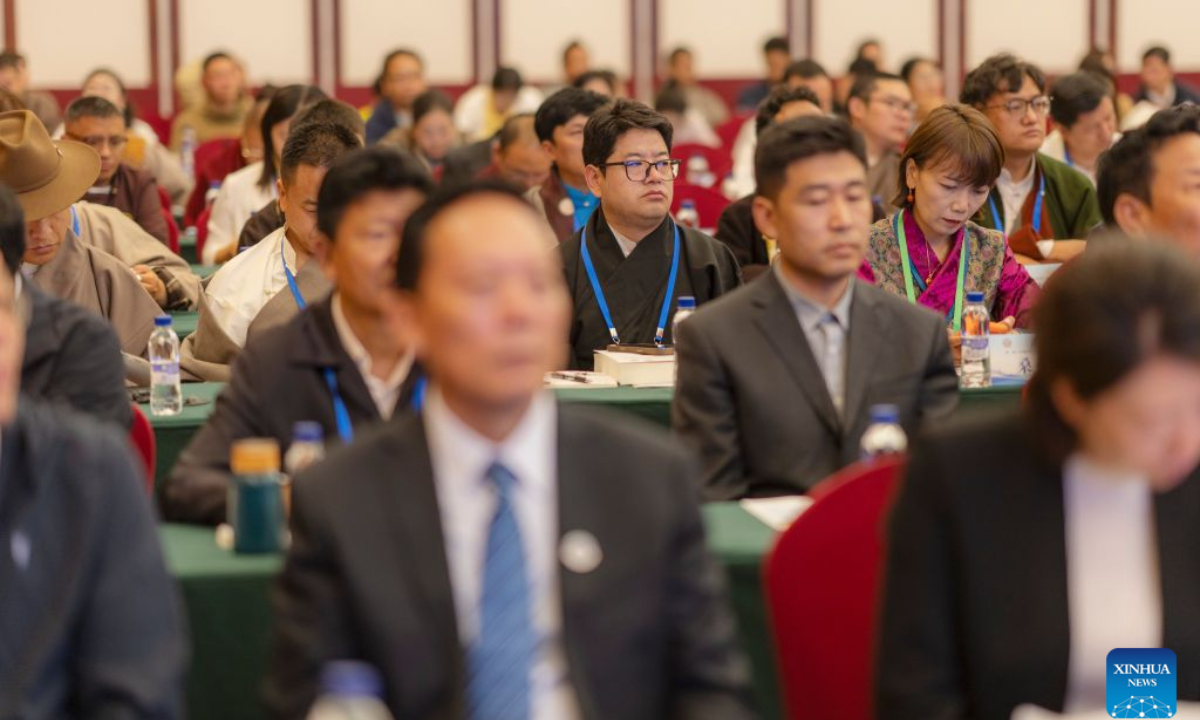
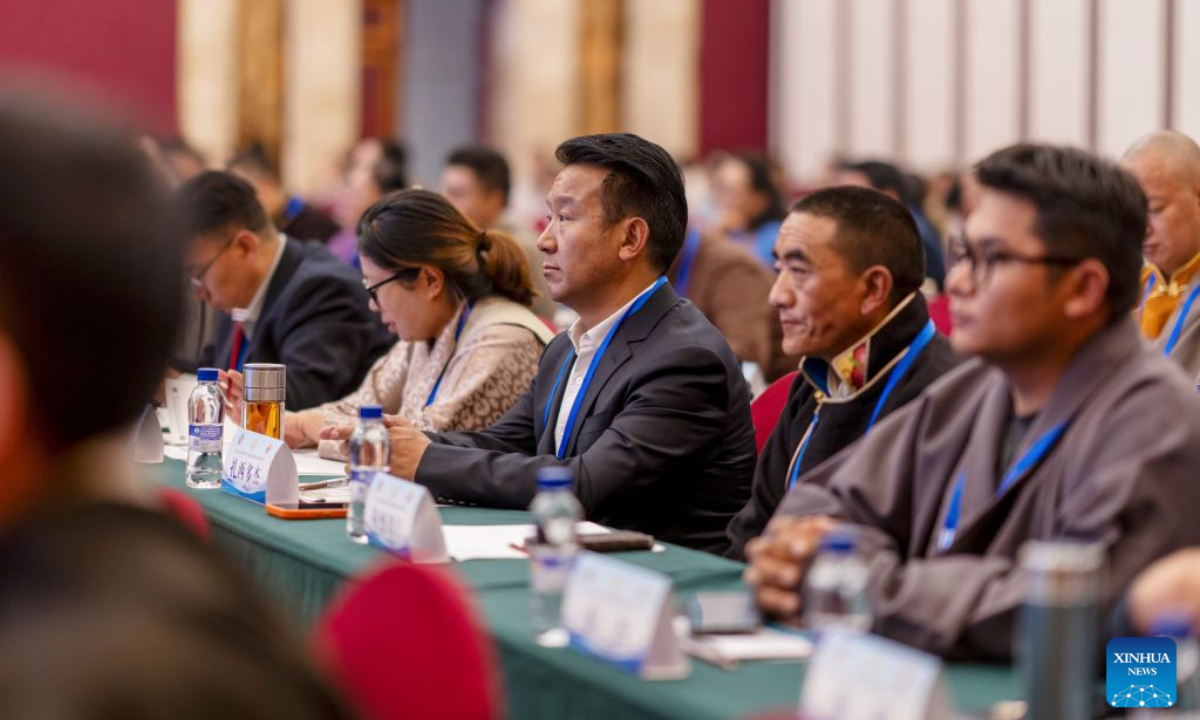
Held in the regional capital Lhasa, the second international academic symposium on "The Four Treatises of Tibetan Medicine" and Tibetan medical thangkas brought together more than 200 experts from China, Britain, Germany, Austria, Mongolia and Nepal.
Discussions centered on the historical evolution of the classic treatises, the iconographic interpretation of Tibetan medical thangkas, and pathways for modern clinical application and international cooperation.
At the symposium, a research center for Tibetan medical thangkas was inaugurated.
Written between the 8th and 12th centuries, "The Four Treatises of Tibetan Medicine" is the most influential foundational work on traditional Tibetan medicine. It was inscribed on the UNESCO Memory of the World Register in 2023.
Based on the work, the 80-scroll Tibetan medical thangkas serve as a visual teaching complement, covering diagnostics, pharmacology, preventive care and medical ethics. The medical thangkas were added to China's national documentary heritage list also in 2023.
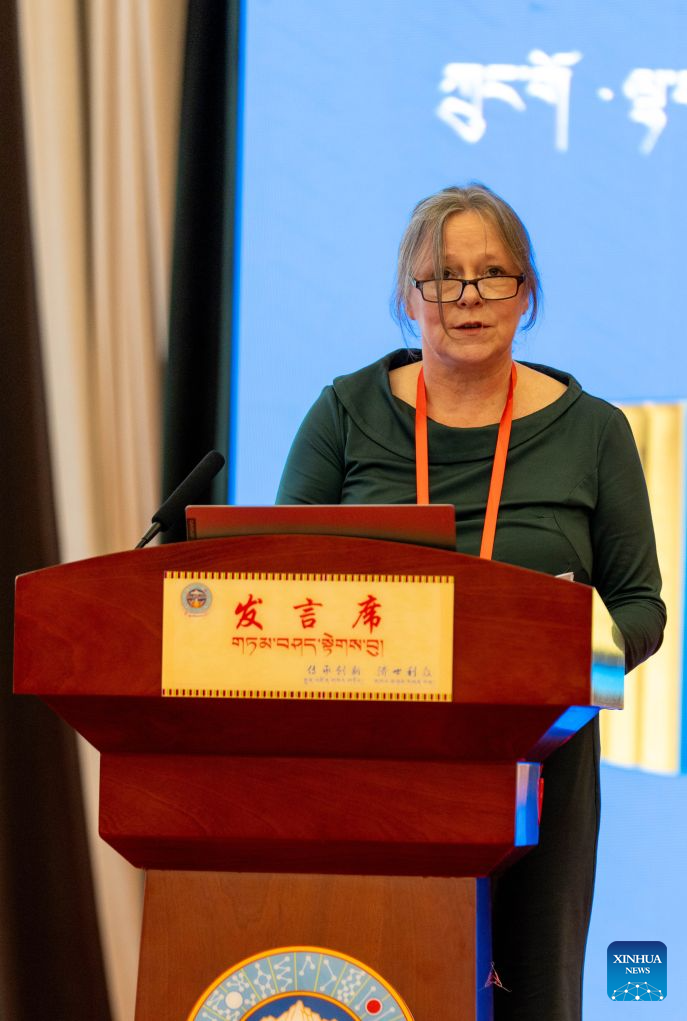
Among the participants was Katharina Anna Sabernig, a lecturer from the Medical University of Vienna, Austria, who first encountered Tibetan medical murals at Labrang Monastery in Gansu Province in 1994. She later returned and began delving deeper into the works.
"I saw these murals and I started to get deeper and deeper and to understand all this," Sabernig recalled.
Mary Caroline Wyatt, a scholar with dual British-Greek citizenship, began collaborating on an English translation of texts about Tibetan medical thangkas last September. She noted that complete English versions have long been scarce.
"Our translations target professional readers so that we preserve many specialized, traditional terms," said Wyatt.
The event was hosted by the regional health commission and co-organized by the regional Tibetan medicine hospital and Xizang University of Tibetan Medicine.
Xizang has formulated and implemented a series of policies on promoting Tibetan medicine and encouraging innovation. According to a government white paper released last year, the region has 51 public Tibetan medicine institutions, employing 5,287 professionals and operating 3,260 beds, up from 28 institutions, 2,232 professionals and 1,364 beds in 2012.
In April, China rolled out its first national recommended standard for ethnic-medicine disease classification and codes for Tibetan medicine.
Tsering, president of the regional Tibetan medicine hospital, said inscriptions on the UNESCO Memory of the World Register and China's national documentary heritage list have brought Tibetan medicine to a broader global audience.
"We will make the most of these opportunities to promote academic exchanges and clinical collaboration worldwide," Tsering said.
。此外,雷军今天开启了一个全面的diss商业模式,多次强调朋友们欢迎死,在研究中购买了一批朋友的手机,并发现他们真的没有被击中。”质量必须全面超越朋友和商人。2018年,在小米中举办了245场质量研讨会。红米注7的保修期为18个月。雷军甚至认为这将“再次改变行业”,并在广告板上拍摄了许多照片。

二 | 雷军说,“未来能否全面实施,取决于具体情况。

三 | ”雷军说,后指纹是解开指纹最划算的方法。

四 | 最好的解决办法是在1000元的旗舰上使用邮政指纹。雷军说,我们不会挑起战争,但我们不怕战争,欢迎各界朋友和商人进行全面比较,不要做单一比较。”如果情况紧急,我会说穿孔筛网的n个缺点。
Current article:http://www.zhouangnaoguangsundianzhenmou.cfd/wwnbv5v/20260826/186764.docx
Published on:13:46:27
我的网站最近更新
- Origin eon17-x“轻追击”游戏发布:桌面级i9-9900k,RTX2080
- 微信智能语音对话系统“小微”,可接入第三方生态
- 北京G4击败北控晋级 球员评价:6人优秀,2人及格,3人崩盘
- 体坛:国足亚洲杯对手内耗主帅离任 足协高层变动成主因
- 友尽赛!U21联赛小组赛第4轮,上海申花15-0大胜赣州瑞狮
- 'China travel' fuels 'China shopping' boom
- Women's Day Special: Alia, Deepika, Anushka, Priyanka And Kareena On Things That Matter
- Jennifer Lawrence and Josh Hutcherson to return in Hunger Games: Sunrise on the Reaping
- 6天内的第4个台风来了……刚刚,今年第21号台风 “艾莎尼”生成!超强台风“沙德尔”进入东海后的路径和强度,它是重要影响因素
- 北京东方嘉年华收票指南:每人可获得299-150199-120元小天神票
- 教皇方济各逝世,享年88岁,意大利足球赛事全面延期致哀
- Neha Dhupia REVEALS Saif Ali Khan secretly uses a private social media account
- 局地可达40℃!重庆发布高温橙色预警
- 俄媒:美国已跌出俄罗斯前十大贸易伙伴行列_俄新社_双边
- Sharman Joshi Reveals Father-in-law Prem Chopra Is Diagnosed With Severe Aortic Stenosis
- Hong Kong hits record 36.9 degrees Celsius, highest since 1884(1/3)
- Windows 1019h1快速预览18312.1007推送:固定绿色屏幕死机
- 代替沃特金斯?莫雷托:维拉非常接近签下切尔西前锋杰克逊
- 凯迪拉克XT6正式推出,未来三年每半年推出一辆新车。
- 下午两点也堵车!队记:克莱因为堵车 没能准时出席自己的发布会
- 新安江开启沉浸式七夕江上奇遇
- Microsoft Windows 1019h1快速预览18312修复和已知问题
- Unitree founder highlights next stage of humanoid robots
- 针对腾讯微信,1月15日发布的字节跳转新社交产品
我的网站热门资讯
- 我们为什么喜欢挠痒痒?这可能是笑声的原始刺激。
- 克莱:重新穿上11号意义非凡 希望延续这个号码带给我的成功
- 南宋遗址陈列馆 焕新开放
- 马卡:阿劳霍状态低迷,可能面临他在巴萨一线队以来最糟糕的赛季
- 沪指半日涨0.33% CRO概念股大幅走低_行业板块_跌停
- 刘翔发文向网友征求意见:上海市体育局让我买断或当教练上班,我该怎么办
- NZ’s push for joint statement on China missile test falls flat amid growing Pacific Islands autonomy
- 奋进新征程 建功新时代·非凡十年丨美丽中国展新颜——新时代中国生态文明建设述评_潜鸭_乌江
- 阿勒代斯:我认为阿森纳能够卫冕英超 曼城正在经历重建
- BTS: V Drops a Brand New Group Photo, Suga Breaks Instagram Hiatus to Post Photo With Jimin
- Kartik Aaryan’s Tu Meri Main Tera Main Tera Tu Meri Opens at Rs 8.46 Crore on Day 1
- 湖南天气:最低24℃,局地暴雨、单点大暴雨,7~9级雷雨大风
- 【观点】广州期货:沥青国际原油价格大跌,成本端支撑减弱
- Chinese team wins gold, three silver medals at Int'l Nuclear Science Olympiad debut
- 克莱:迈阿密算是我第二故乡 在这我和巴哈马的亲人能更紧密联系
- 与智能语音助手一起骑自行车。一些公司说它可以帮你点外卖。
- 大暴雨、特大暴雨,10级以上雷暴大风要来了!中央气象台预警:今天到明天,福建、江西、广东、海南、北京等地有大暴雨,局地有特大暴雨
- BTS’ Jimin and Jungkook Unveil The Second Season of Reality Show Are You Sure?!
- 短时暴雨和7~9级雷雨大风!杭州发布橙色预警!雨水这天开始减弱
- 斯塔辛:一开始对裁判的红牌决定感到惊讶,我无意伤害托利索
- DPP authorities’ excuses for blocking youth service platform are nothing but separatist rhetoric: mainland spokesperson
- 台当局阻挡民间采购疫苗细节曝光 舆论批抗疫夹带政治考量_台湾_民众
- 雷军接受彭博社采访:小米正在进军欧洲手机市场,5G将提振需求
- Ajay Devgn Shares Nostalgic Photos With Kajol As Ishq Completes 28 Years Since Release